The Russian Blue Cat is one of the most elegant and intriguing feline breeds. Known for their soft silvery-blue coat, emerald-green eyes, and gentle personality, these cats are adored by pet owners around the world. But beyond their stunning appearance, Russian Blues have unique behaviors, care requirements, and traits that make them stand out. Whether you’re considering adopting one or simply want to learn more about this breed, this guide covers everything you need to know.
Content
Overview of the Russian Blue Cat
The Russian Blue is a medium-sized, short-haired cat known for its plush silvery-blue coat and striking green eyes. They are intelligent, affectionate, and surprisingly playful, despite their reserved nature around strangers. Here are some quick facts about the breed:
Origin: Russia
Life span: 10–20 years
Weight: 7–15 pounds
Temperament: Affectionate, intelligent, calm, and gentle
Ideal home: Families, singles, or seniors
Cost: $400–$1,200 depending on breeder or adoption
Many people are drawn to Russian Blues because of their low-maintenance grooming needs and their reputation as quiet, gentle companions.
Health and Lifespan
Russian Blue Cats are generally healthy cats but can be prone to weight gain. Regular veterinary check-ups, a balanced diet, and daily play are essential. Common health considerations include:
Obesity due to overfeeding
Dental issues — regular brushing helps
No breed-specific major illnesses, making them robust companions
Personality and Temperament
The Russian Blue cat personality is one of its most captivating traits. These cats are known for being affectionate and loyal to their owners, but they can be shy and cautious around strangers. Unlike some breeds that demand constant attention, Russian Blues enjoy interactive play and will often follow their favorite humans from room to room.
Key personality traits include:
Intelligent and curious: They quickly learn routines and enjoy puzzle toys.
Reserved yet loving: While cautious with strangers, they are devoted to family members.
Playful without being demanding: They love toys and games, but aren’t overly hyperactive.
Gentle and calm: Perfect for households that prefer a serene environment.
Caring for a Russian Blue isn’t difficult, but understanding their specific needs ensures they stay healthy and happy. Here’s a detailed look at their care:
Nutrition
Feeding a Russian Blue kitten or adult cat requires balanced, high-quality food. They have a tendency to gain weight if overfed, so portion control is important.
Kitten feeding: 3–4 small meals per day of high-protein kitten food
Adult feeding: Twice daily of premium cat food
Avoid: Excess treats and human food, which can upset digestion
Grooming
Despite their plush coat, Russian Blues require minimal grooming. Their short hair is low-shedding, which makes them ideal for homes sensitive to allergies.
Brush once a week to remove loose fur
Bathe only if necessary
Trim nails and clean ears regularly
Exercise and Play
These cats enjoy interactive toys and short bursts of play. Simple games like feather wands, laser pointers, or puzzle feeders help keep them mentally stimulated.
History and Origin
The Russian Blue cat originated in northern Russia, possibly from the port city of Arkhangelsk. Historically, they were valued for their hunting skills and striking appearance. By the late 1800s, Russian Blues were exported to Europe, where they gained popularity in cat shows.
Interestingly, the breed almost always remained purebred due to natural isolation, contributing to their uniform silvery-blue coat and emerald eyes.
Physical Characteristics and Breed Standard
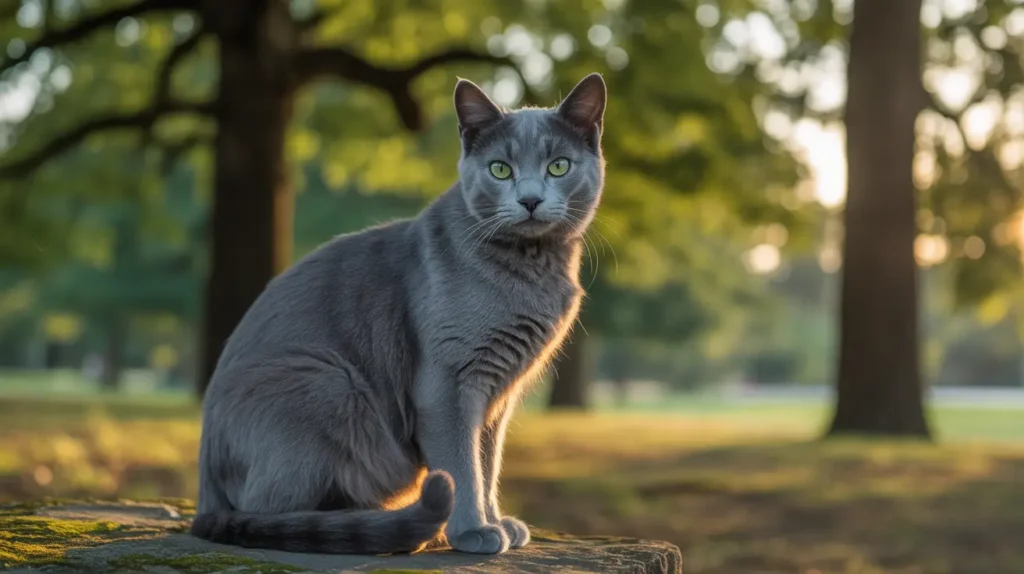
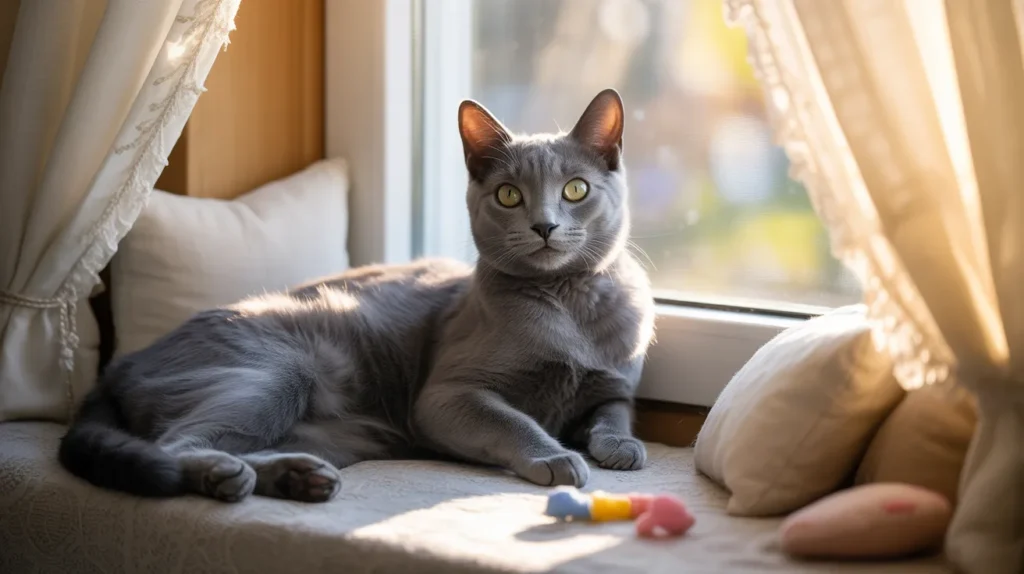
Russian Blues are medium-sized with a slender but muscular build. Their features are elegant and refined.
Eyes: Bright green and almond-shaped
Coat: Short, dense, plush, silvery-blue
Ears: Large, pointed, and alert
Body: Medium-sized, muscular, with graceful movement
Their refined appearance, combined with their calm personality, makes them stand out among other short-haired breeds.
Real-Life Case Study: Living With a Russian Blue
Meet Milo, a 4-year-old Russian Blue adopted by a young couple in New York. Milo initially hid under furniture for the first two days, showing the breed’s natural shyness. But within a week, he started following his owners around, curling up beside them during work-from-home hours.
Milo’s owners noticed:
He responds well to interactive play sessions, especially laser pointer games.
He prefers quiet spaces and avoids loud gatherings.
His coat stays sleek with just weekly brushing, proving low-maintenance grooming.
Milo’s story illustrates the affectionate yet reserved nature of Russian Blues — perfect for families or individuals seeking a loyal, calm companion.
Adoption, Cost, and Finding a Russian Blue Cat
Russian Blues can be found through responsible breeders or cat adoption centers. Prices vary depending on pedigree and location:
Adoption: $50–$200
Breeders: $400–$1,200
When adopting, always ensure:
Health certifications are provided
Vaccinations are up-to-date
The cat is well-socialized
Conclusion
The Russian Blue cat is a perfect blend of elegance, intelligence, and affection. Their reserved yet loyal personality, minimal grooming needs, and playful nature make them ideal companions for families, singles, or seniors. By understanding their personality, care requirements, and history, potential owners can provide a loving home for these remarkable cats.
Whether you adopt a kitten or an adult, a Russian Blue will reward your care with unwavering loyalty, quiet companionship, and a touch of silver-blue elegance in your home.
Looking for a cat that’s easier on allergies? Explore our guide on Hypoallergenic Cats to discover breeds, care tips, and allergy-friendly living advice.
FAQs
How much do Russian Blue cats cost?
Russian Blue cats typically cost $400–$1,200 from breeders, while adoption may range $50–$200.
Is my cat a Russian Blue or just gray?
A true Russian Blue has silvery-blue plush coat and emerald-green eyes, unlike generic gray cats.
Do Russian Blue cats meow a lot?
They are generally quiet and calm, meowing only to communicate with their owners.
Are Russian Blue cats cuddly?
Yes, they are affectionate and loyal, enjoying cuddles with trusted family members.