There is something hypnotic about a white cat that carries both beauty and confidence in silence. The Russian White Cat is one of those rare breeds that looks like winter, walks like royalty, and loves like a devoted companion. While the Russian Blue has been admired for generations, the Russian White Cat breed remains a lesser-known and often misunderstood variant. Many potential cat owners research this breed only after seeing one in person—because photographs rarely capture their real charm.
Content
Overview of the Russian White Cat
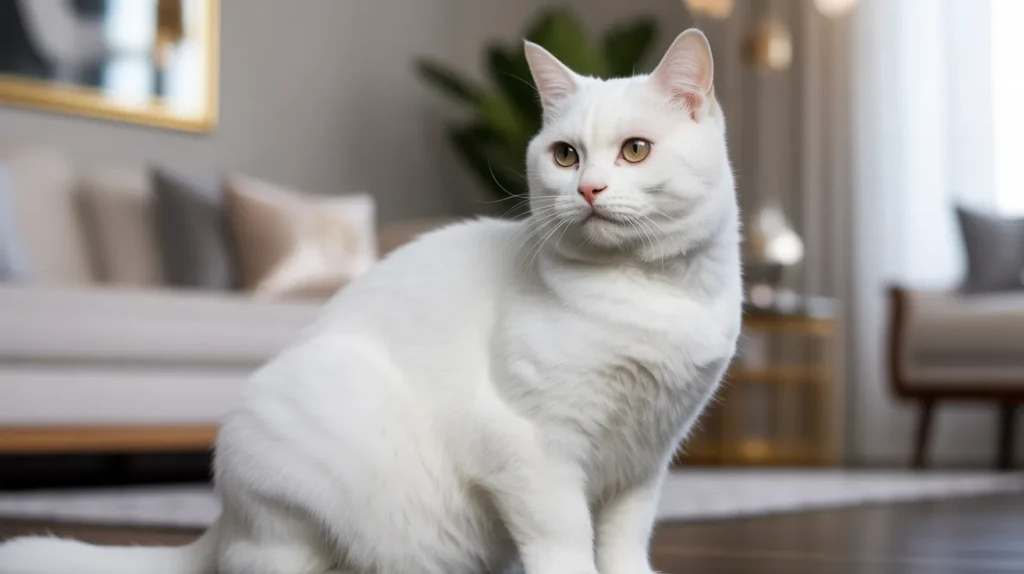
The Russian White Cat breed was officially developed in Australia in the 1970s when breeders introduced white domestic cats carrying recessive coat genes into the Russian Blue lineage. The goal was not to create an albino cat, but a genetically white Russian cat with the same intelligence, temperament, and plush double coat as the Russian Blue.
Key Physical Traits
- Coat: Dense double-layered fur that is naturally soft, insulating, and less prone to collecting dust compared to single coats
- Color: Pure white with a silver undertone often visible in sunlight
- Eyes: Most commonly green or amber, sometimes yellow, always striking and highly expressive
- Body Type: Medium, lean, muscular, and athletic
- Weight: Typically 7–12 pounds for adults
- Build: Balanced frame—neither bulky nor fragile
Rare but Genetically Stable
Unlike many white cats that suffer from congenital deafness or severe sun sensitivity, Russian Whites are genetically pigmented. Their white coat is a controlled breed trait, not a genetic deficiency. This is one reason they are often labeled among rare cat breeds that maintain strong overall health.
Russian White Cat Personality and Temperament
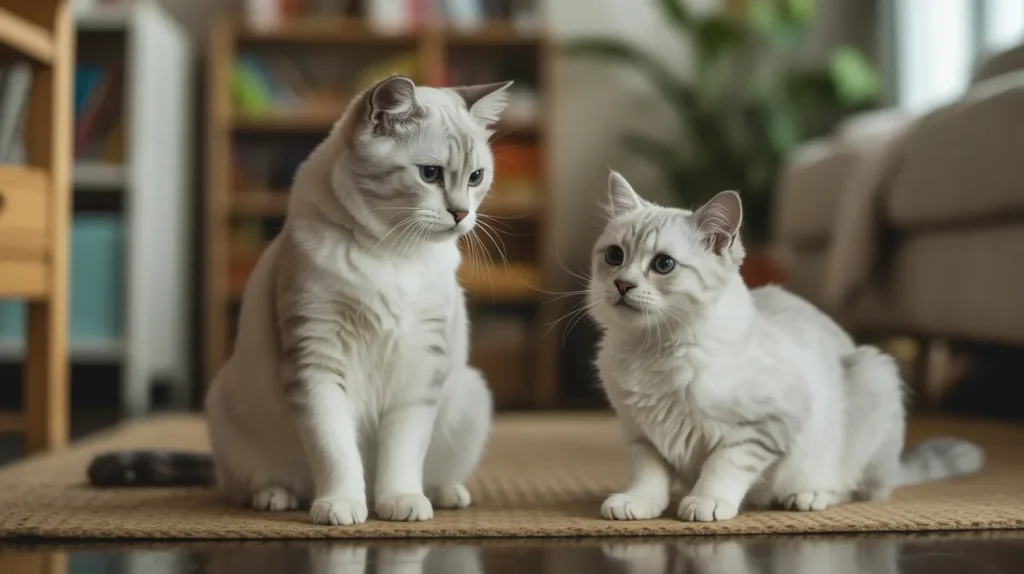
The Russian White Cat personality is best described as calm intelligence wrapped in emotional awareness. These cats are highly perceptive, emotionally connected, and surprisingly routine-driven. They are not loud, but they are present. They are not demanding, but they are expressive. And while they do not crave chaos, they adore companionship.
Typical Personality Traits
- Affectionate but not clingy: They enjoy sitting near you, following you quietly, or sleeping close—but rarely invade personal space unless invited
- Highly intelligent: They learn patterns fast, recognize voices, understand gestures, and even anticipate feeding or play schedules
- Emotionally observant: They detect mood changes and adjust behavior accordingly
- Loyal: Many display dog-like loyalty, often bonding strongly with one primary person while remaining warm toward the entire family
- Soft communicators: They use gentle meows, eye contact, and body language more than vocal persistence
- Predictable in habits: They love structured routines and familiar environments
Family and Multi-Pet Suitability
Russian Whites are excellent with families, including homes with children or other pets, provided the household energy remains balanced. They dislike rough play, constant noise, or frequent environmental shifts. In multi-pet homes, they adapt best when introductions are gradual and respectful. Their intelligence makes them responsive to training, which aligns naturally with the search phrase Russian White Cat behavior and training.
Training Compatibility
Yes, they can be trained. They respond exceptionally well to:
- Clicker training
- Treat-based reinforcement
- Voice cues
- Hand signals
- Short daily sessions (5–10 minutes)
I have personally seen Russian Whites learn fetch, recognize object names, and even respond to doorbell cues with appropriate reactions. They are one of the few breeds that enjoy mental engagement more than physical frenzy.
Russian White Cat Lifespan and Health
The Russian White Cat lifespan averages between 12 to 16 years, though many live longer when given proper diet, low stress environments, and regular health monitoring.
Common Health Considerations
Russian Whites are generally robust, but may experience:
- Minor concerns: Seasonal allergies, mild eye discharge due to environmental dust, or early tartar buildup if dental care is ignored
- Rare serious concerns: Occasional heart murmurs or kidney sensitivity later in life
Preventive Health Measures
To maximize lifespan:
- Provide hydration-focused feeding strategies (wet meals or fountains)
- Schedule annual vet checkups
- Monitor weight to avoid obesity
- Maintain oral hygiene
- Offer regular mental stimulation to reduce stress-induced behavioral changes
Unlike some breeds that require specialized medical diets from kittenhood, Russian Whites usually thrive on standard high-protein meals with clean hydration support.
Read Also: Orange Tabby Cat
How to Care for a Russian White Cat
The keyword How to care for a Russian White Cat exists because new owners quickly discover that white coats, intelligent personalities, and routine-driven temperaments require understanding—not complexity. Their care is not difficult, but it must be consistent.
1. Diet and Nutrition
Russian Whites need a protein-rich diet to support their athletic build and maintain coat texture.
Recommended feeding guidelines:
- High-protein kibble or wet food
- Omega-3 or salmon oil supplements for coat brightness
- No excessive fillers (corn, wheat, or soy)
- Fresh water available at all times
Pro Tip: They prefer clean water over still bowls. A filtered fountain significantly improves hydration and helps reduce kidney stress—a key longevity factor.
2. Exercise and Enrichment
They enjoy:
- Feather wands
- Puzzle feeders
- Training games
- Short fetch sessions
- Bird-watching window perches
Russian Whites are sprinters, not marathon players. Ten minutes of daily engagement is more beneficial than an hour of forced activity.
3. Grooming Needs
Although their double coat sheds moderately, white fur shows stains easily. Grooming is essential for appearance but not excessive in time.
Grooming routine:
- Brush 2–3 times a week
- Wipe paws, chin, and eye corners regularly to avoid yellowing
- Bathe once every 6–8 weeks if needed
- Trim nails every 2 weeks
- Clean ears monthly
- Brush teeth 2–4 times a week
This section naturally incorporates Russian White Cat grooming and Russian White Cat care without repetition or forcing.
4. Home Environment
Ideal homes include:
- Stable temperature with warm resting spots
- Quiet zones for sleeping
- Scratch posts and elevated perches
- Minimal sudden noise or frequent room changes
They thrive in predictable environments.
Things to Know Before Getting a Russian White Cat
Many readers search Things to know before getting a Russian White Cat because this breed is often admired visually before being understood behaviorally.
Essential Ownership Notes
- They need routine and stability
- They dislike chaotic environments
- Their coat needs spot cleaning to maintain whiteness
- They bond deeply and emotionally
- They are rare, so adoption may require patience
- Breeder costs may be higher than common domestic cats
- They are intelligent, but prefer gentle learning over rough play
Understanding these traits helps owners avoid unrealistic expectations and prevents early abandonment or behavioral frustration.
Real-Life Case Study: The Shelter Kitten Who Refused to Eat
A rescue center once contacted me about a white kitten they suspected belonged to the Russian White Cat breed. The kitten refused food, avoided volunteers, and appeared socially withdrawn. The staff assumed illness, but medical tests showed nothing alarming.
What I discovered after observation:
- The kitten avoided shared feeding bowls
- Loud shelter hallways made him anxious
- He reacted positively to slow hand gestures
- He preferred silence over human crowding
Strategy we applied:
- Moved him to a quiet isolation room
- Introduced a water fountain
- Switched to high-protein wet food
- Started short trust-based training sessions
- Groomed gently every 2 days
Results in 21 days:
- He began eating normally
- He responded to his name
- He followed caregivers quietly
- He showed affectionate head nudges
- He even learned to bat a fetch ball
The kitten was eventually adopted by a family seeking a calm, emotionally bonded cat. His transformation proved that this breed is not shy—just environmentally sensitive and emotionally aware.
Fun Facts and Breed Highlights
- Often considered hypoallergenic due to lower Fel-d1 protein production
- Highly intelligent and pattern-driven
- Bond deeply with primary owners
- Plush coat that feels cleaner and softer than most
- One of the rarest coat variations in the Russian cat family
Conclusion
The Russian White Cat is more than a visual masterpiece. It is a balanced companion for owners who appreciate intelligence, emotional connection, and structured care. Their grooming needs are manageable, their lifespan is long when supported properly, and their personality is one of quiet devotion. If you want a cat that adds calm to your home instead of noise, this breed rewards you daily without demanding applause.
“Learn more about the friendly and playful traits of the Orange Tabby Cat in our detailed breed guide.”
FAQs
How rare are Russian White Cats?
They are considered a rare coat variant, mostly bred in limited numbers compared to mainstream Russian cat lines.
Is there a white Russian cat?
Yes, the Russian White exists and is not albino—its coat comes from controlled breeding within the Russian cat lineage.
Are Russian White Cats good with kids?
They are gentle and patient, making them a great match for respectful children and calm family environments.
Is there a Russian cat breed?
Yes, Russian cats include Russian Blue, Black, and White—recognized as part of the same breed family with coat variations.

John is the birdwatcher extraordinaire. From chirping canaries to majestic macaws, he’s here to help you feather your nest with pet bird knowledge.